

October 22, 2026


Quick answer
Order fill dirt for anything that has to hold a load or stay at grade: backfill, a building pad or a low lot that needs raising. Order topsoil only for the top few inches where something has to grow. Fill is subsoil with almost no organic matter, so it compacts and stays put. Topsoil is the organic surface layer, so it feeds roots but settles under weight.
Both materials come from the same soil profile.
The difference is depth. Topsoil is the surface layer and fill is what sits under it, and that position explains most of the gap in price and in how each one behaves under a compactor. Any honest fill dirt vs topsoil comparison starts with where each layer sat in the ground before someone dug it up.
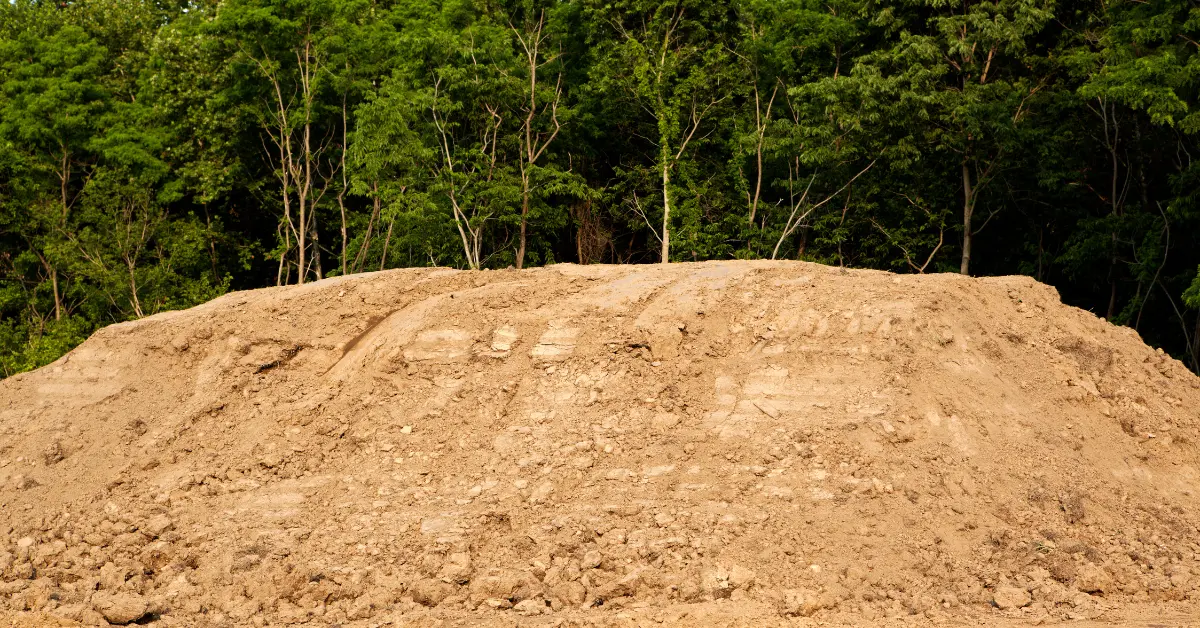
The working answer to what is fill dirt: subsoil and parent material dug from below the topsoil, mostly mineral soil with some rock and as little organic matter as possible. With nothing in it to rot, it can be compacted in lifts and hold grade under a slab, a road shoulder or a pad raised out of a flood zone.
It goes under things.
The types of fill dirt for construction range from clean fill to clay, sandy and gravelly fills and engineered blends, each suited to a different load and drainage need.
Ask a soil scientist what is topsoil and the usual answer is the A horizon.
That is the dark surface layer with the highest concentration of organic matter and microbial life in the profile, and the entry for topsoil on Wikipedia puts its usual depth at 5 to 10 inches. It grows lawns and planting beds. Nothing structural should sit on it, because the organic matter that feeds roots also decomposes, and a layer that loses volume settles under a footing.
Table: What to check before the first truck
| | Fill dirt | Topsoil |
| Ask for | Gradation, Proctor results, clean fill papers | Organic matter, texture and pH |
| Common mislabel | Fill with roots or debris sold as clean | Pit subsoil sold as topsoil |
| Field check | Wood, trash or soft spots under the roller | Dark color, crumbles by hand, no salt crust |
Treat the cost ranges in the cards as a sanity check, not a bid.
They are typical figures from HomeAdvisor's 2026 cost guide, updated in June 2026 and priced at homeowner scale. Delivered pricing on a commercial job depends on volume and on how far the trucks run.
Fill is the cheaper yard and the stronger one.
Topsoil is the only one of the two that grows grass, and buyers pay for that with a higher price per yard and a material that moves under load.
Typical fill dirt cost runs $5 to $30 per cubic yard in HomeAdvisor's 2026 cost guide. Angi's 2026 data, updated in September, puts unscreened fill at $8 to $15 and structural fill at $15 to $25. On a large import, trucking can outweigh the material line.
Typical topsoil cost runs $12 to $55 per cubic yard in the same HomeAdvisor guide. True topsoil is a limited surface layer that has to be stripped and stockpiled, and it is often screened too. The premium usually applies only to the top 4 to 12 inches of the site, so it lands on a much smaller volume than the fill.
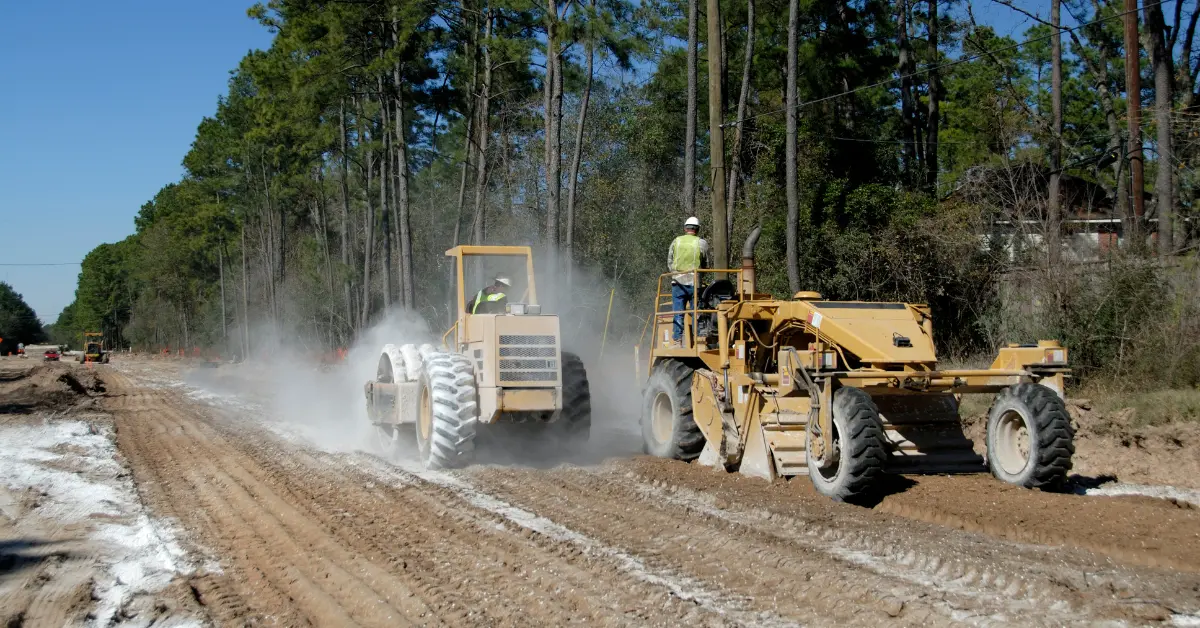
Structural fill goes down in lifts and gets rolled to a percentage of the maximum dry density from a lab Proctor test. That test is ASTM D698 (standard effort, 12,400 ft-lbf/ft³) or ASTM D1557 (modified effort, 56,000 ft-lbf/ft³), and the project spec or local code picks which one and what percentage. Fill with buried roots or wood can pass on day one and fail later, once the organics rot and leave voids.
Topsoil gets one or two passes from a tracked machine to firm it against erosion, not a density test. Under a slab or a pavement section it keeps settling as organic matter breaks down. On slopes steeper than 3:1, county erosion guidance calls for matting or geotextile over it.
Clean fill is defined by what is not in the dirt: no debris and no contaminants. What counts as clean differs by location and by receiving site, and a load accepted on one job can be rejected on the next. Our guide to clean fill pricing explained shows how testing and documentation end up in the per-yard number.
There is no federal legal definition of topsoil in US commerce. Utah State University Extension warns that many pit materials sold as topsoil are actually subsoil, and its 2010 guideline treats 2 percent organic matter or more as ideal and anything under 1 percent as unacceptable. Ask for a soil test before you sign the order.
Pick by what sits on the material when the job is done.
A slab or a pipe means fill. Grass or a planting bed means topsoil on top, and the layer under that topsoil is probably still fill, placed and rolled weeks earlier by the grading crew.
Fill dirt, compacted in lifts to the spec. For pads and footings, ask for select or structural fill with Proctor results, and match them to the geotechnical report before the material ships. Common fill works for berms and grade changes that carry no structure.
Fill, compacted in layers. Unscreened fill usually works for foundation and trench backfill. Screened fill costs more but spreads and compacts more evenly, because no oversized rock or clod breaks up the lift. The trade-offs of screened vs unscreened fill come down to that consistency versus a lower price.
Topsoil over the fill. Chattanooga-Hamilton County guidance says to scarify the compacted subgrade to a depth of 3 inches so the layers bond, then spread a minimum of 4 inches. Order screened topsoil wherever seed or sod goes, since rock and clods wreck a finish grade.
For the topsoil vs garden soil choice, in-ground beds usually get bulk topsoil with compost worked in. Garden soil is sold already amended, but its recipe changes by brand and supplier, so read the bag or ask for the blend.
For how much topsoil do I need, the math is area in square feet times depth in inches, divided by 324. A 5,000 square foot lawn at 4 inches takes about 62 cubic yards. Ask whether topsoil delivery is priced into the yard or billed per load or by the hour.
A search for fill dirt near me turns up pits and yards one phone call at a time. Site jobs usually import fill early and topsoil last, often weeks apart, so it pays to line up both from the grading quantities. Submit the material and quantity through the Find Dirt marketplace and a Soil Connect Dirt Specialist will contact you within 1 business day. Soil Connect's Dirt Pros handle the details to make sure the dirt meets your project specifications.
Frequently asked questions
Yes, for anything that will be seeded or sodded. Screening pulls out rock and roots, and Utah State University Extension says topsoil with a high share of coarse fragments should be screened before use. Unscreened topsoil is fine deep in a bed or behind a wall where no finish surface matters. Ask the supplier for the screen size, since it sets the largest piece in the pile.
Grass will sprout in fill dirt but rarely thrives there. Fill is subsoil, which Utah State University Extension describes as higher in clay, salts and lime than topsoil, and it carries little of the organic matter that builds soil structure and holds nutrients. That is the core of the topsoil vs fill dirt split: fill holds grade, topsoil holds roots. Cap the fill with at least 4 inches of topsoil, or work in heavy compost if topsoil is not available.
Plan on 4 inches minimum for grass, the typical figure in Chattanooga-Hamilton County stormwater guidance. Go to 6 to 12 inches where the site was cut down to rock. Shrubs and trees need a good layer of topsoil over suitable subsoil. One cubic yard covers 81 square feet at 4 inches, so a 10,000 square foot lawn needs about 123 cubic yards.
Use topsoil plus compost for large in-ground beds, since bulk topsoil usually costs less per yard and you control the blend. For a raised bed mix, one option Iowa State University Extension gives is about 70 percent topsoil and 30 percent compost. Bagged garden soil works for small beds and boxes. Neither belongs under a patio or walkway, where compacted fill or base stone goes.
Keep reading
Send the material and quantity, and a Soil Connect Dirt Specialist will contact you within 1 business day.