November 1, 2026


TL;DR
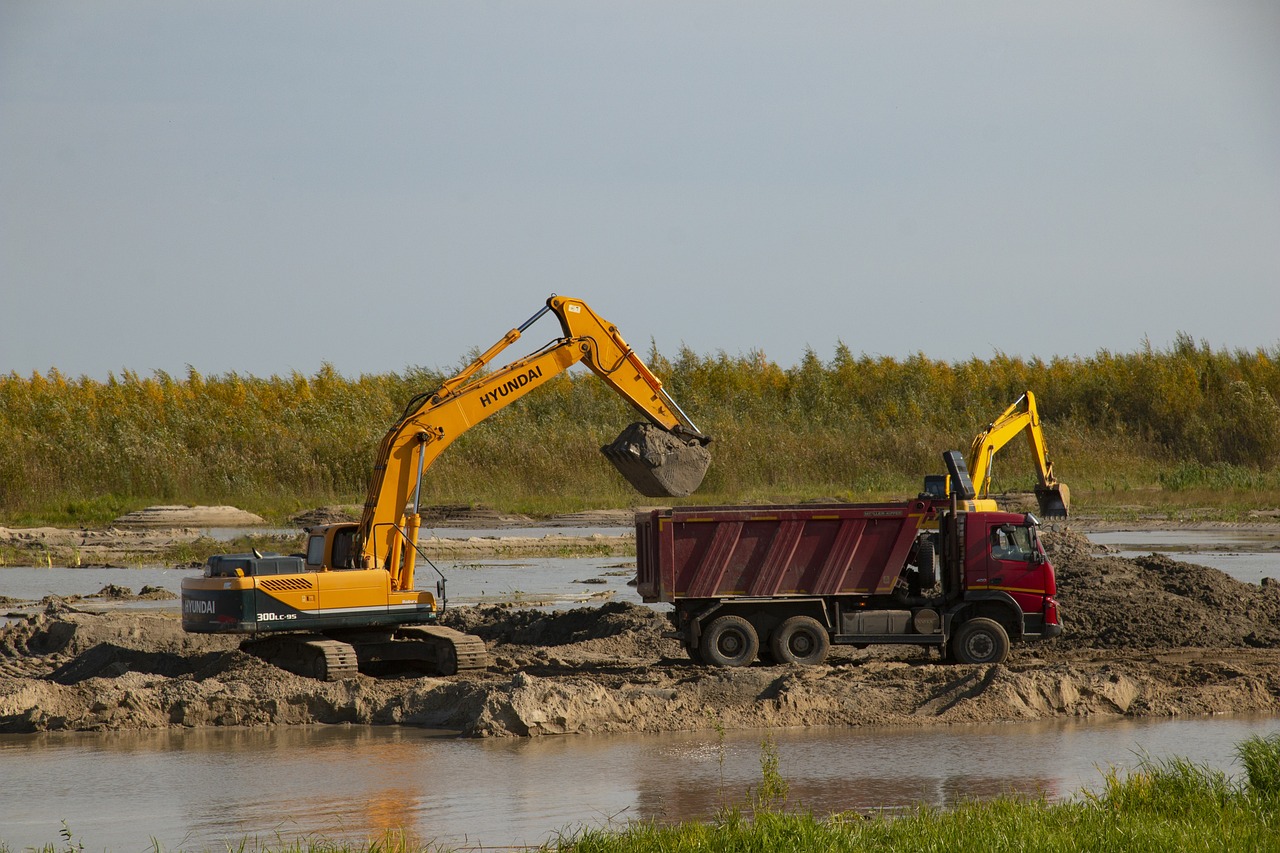
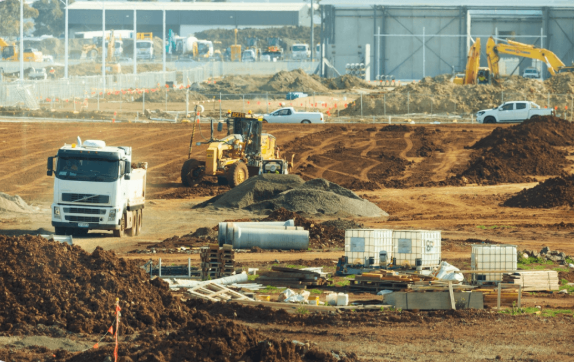
A borrow pit is an excavation dug to supply soil for fill, used about the way it comes out of the ground. Contractors take borrow from inside the project, from a separate parcel under a landowner deal, or from a commercial pit, and the permits that apply depend on the state and county.
Haul distance usually decides the cost. Before opening a pit, check whether a nearby jobsite is already exporting dirt that meets the spec.
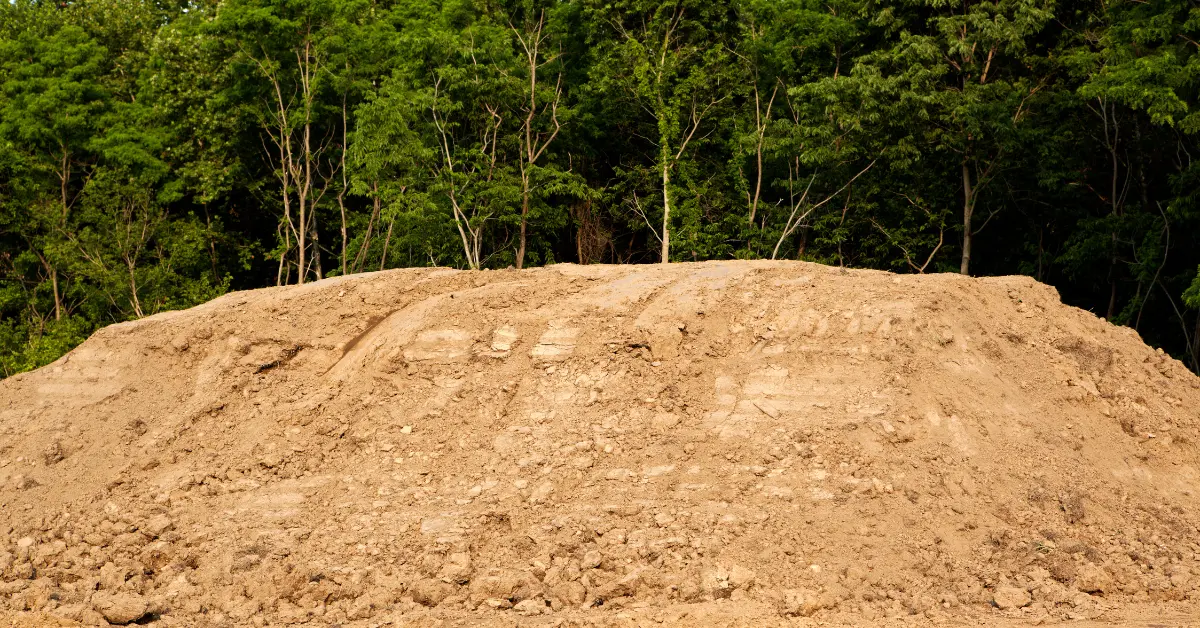
A borrow pit is a surface excavation that supplies loose earth for fill and sends it out mostly unprocessed. Highway agencies and federal safety regulators define it in much the same terms.
Ask what is a borrow pit and three public definitions line up. The Wisconsin Department of Transportation's construction manual says borrow excavation is generally material obtained from outside the right-of-way to complete the construction of embankments. North Carolina's Mining Act defines a borrow pit as an area where soil or other unconsolidated material is removed for highway construction and maintenance without further processing.
The 1979 interagency agreement between MSHA and OSHA adds the field view. Its borrow pit is dug once or only as needed, used for its bulk more than its intrinsic qualities, and placed on land relatively near the pit. No milling is allowed beyond a scalping screen to pull out large rocks and debris.
Table: Three public definitions of borrow
| Source | What the definition stresses |
| WisDOT Construction and Materials Manual, section 335 | Material from outside the right-of-way, used to build embankments |
| North Carolina G.S. 74-49 | Soil removed for highway work without further processing |
| MSHA and OSHA agreement, 1979 | Bulk fill used near the pit, no milling |
Two traits separate a borrow pit from a commercial pit. The material is used as dug, and it usually serves one project or one owner.
Once a site starts washing or crushing product for sale, it reads more like a sand and gravel mine under these definitions, and the paperwork changes with it.
Borrow material is native soil dug from a pit or a cut and placed as fill as it comes. Imported fill material is trucked in from a commercial pit or yard, usually to a named gradation, or comes as surplus from another jobsite.
The difference shows up in the spec book. Wisconsin's standard specification for the Borrow bid item asks for satisfactory soil, or a mix of soil, stone and gravel, suitable for the intended purpose and free from sod, stumps, logs and other perishable matter. Select Borrow must meet a separate special provision written into the contract. That split is typical. Common borrow is judged on whether it compacts and stays put, while select or structural fill material carries limits on fines, plasticity and particle size.
Contractors weighing a commercial source against dirt from another project can read Soil Connect's breakdown of quarry dirt vs jobsite dirt. The working rule: pay for processed fill only where the spec demands it, and use borrow or matched surplus for bulk embankment.
On-site borrow comes from inside the project limits, and off-site borrow comes from land outside them. Agencies treat the two differently for approval, measurement and cleanup.
Wisconsin's specification lists the accepted sources for borrow excavation: contractor-furnished sources the engineer approves, state-furnished sources outside the right-of-way, and surplus from other parts of the job. Material from inside the right-of-way but outside the planned excavation limits needs the engineer's written authorization, as does surplus from other contracts. The same section says that when the contract itself specifies moving material from one division of the job to another, that material is not borrow.
Table: On-site vs off-site borrow at a glance
| | On-site borrow | Off-site borrow |
| Where it comes from | Inside the project limits, outside the planned cuts | A separate parcel, often private land |
| Who arranges access | The owner already controls the land | The contractor negotiates with the landowner, unless the contract says otherwise |
| Typical approvals | Engineer sign-off and the site's erosion plan | Source approval, local zoning, possibly a state mining permit |
| Haul route | Inside the site, often off-road | Public roads, with trucks and tickets |
| Cleanup | Graded into the final site plan | Topsoil replaced, seeded, erosion controls in place |
Private site work follows the same logic. Taking borrow from a planned stormwater pond turns a cut into fill without a single truck on a public road. North Carolina's Mining Act excludes excavation or grading done solely for on-site construction, so an on-site cut stays under the site plan. An off-site pit has more approvals to clear before the first load leaves.
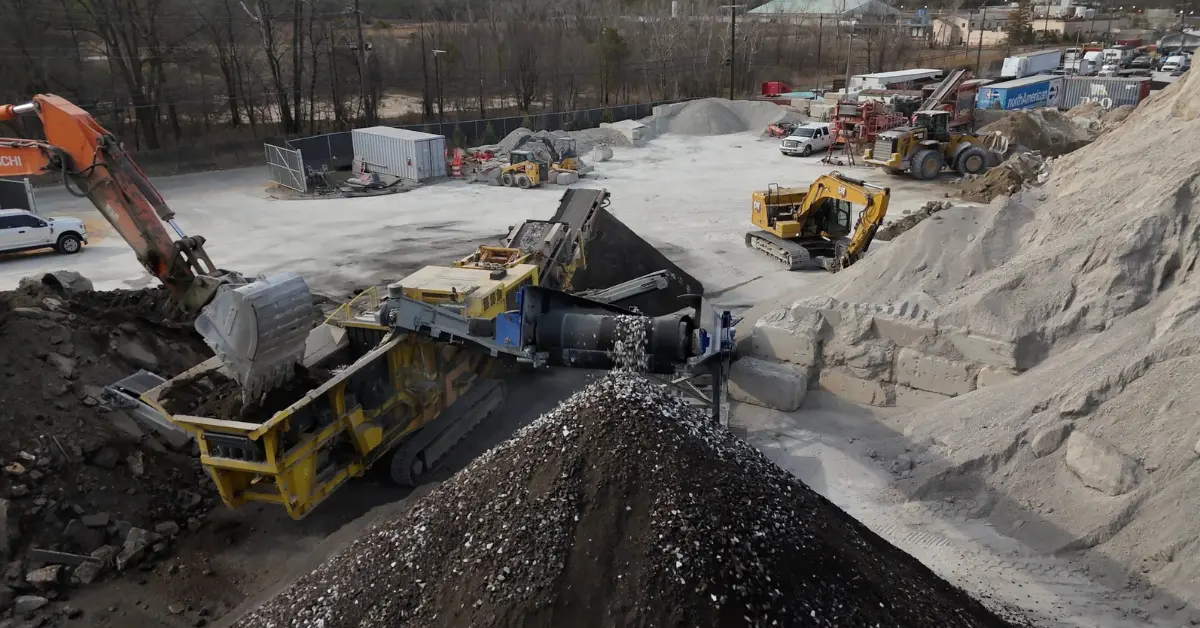
A gravel pit and a sand pit are mines that wash, screen and sell graded aggregate. A dirt pit supplies unprocessed soil for fill. The product, the processing and the federal safety agency all differ.
USGS estimates that 3,400 companies operated 6,500 construction sand and gravel pits across all 50 states in 2025, producing about 870 million metric tons. About 42% of that went into portland cement concrete, 20% into road base and coverings, and 12% into construction fill. Wikipedia's construction aggregate entry covers sand & gravel sourcing basics, including why pits sit close to the cities they supply.
Table: Gravel pit vs sand pit vs dirt pit
| | Gravel pit | Sand pit | Dirt pit |
| Main product | Screened or crushed gravel, base stone | Concrete sand, mason sand, fill sand | Common fill, clay, topsoil |
| Processing | Washing, screening, often crushing | Washing and screening | Little or none beyond a scalping screen |
| Typical spec | DOT base or drainage gradation | ASTM C33 for concrete sand | The project's fill spec |
| Typical use | Base course, drainage stone, concrete | Concrete, pipe bedding, backfill | Embankment, grade raises, berms |
| Federal safety agency | MSHA | MSHA | OSHA, for most construction borrow |
The safety line matters on a bid. The MSHA and OSHA agreement lists sand and gravel among the commodities MSHA covers, while borrow pits fall under OSHA unless they sit on mine property or relate to mining. A dirt pit that starts screening and selling to the public can drift across that line, so confirm jurisdiction before the crew mobilizes.
Borrow pit permits depend on the state, the acreage and what happens to the material. Washington and North Carolina show how far apart the rules can sit.
Washington requires a Surface Mine Reclamation Permit from the Department of Natural Resources for a mine with more than 3 acres of mine-related disturbance, or with a highwall both higher than 30 feet and steeper than 45 degrees. The local government has to approve the mine siting first, and DNR requires a reclamation bond before the permit issues.
North Carolina requires a mining permit once the affected land exceeds one acre. The Mining Act definitions exclude grading for on-site construction. They also exclude a borrow source for a single off-site project when the soil is used without further processing, the affected land including access roads is five acres or less, the dig is finished within one year, an erosion and sedimentation control plan is approved, local ordinances are met, and the work involves no blasting, no stream material, no off-site waste and no groundwater discharged beyond the affected land.
Those two states are examples, not a template. Check your own state's program before bidding a pit.
Counties often add zoning, haul-route and work-hour conditions, and Wisconsin requires every noncommercial borrow pit on its jobs to comply with local zoning. One federal item applies nearly everywhere: Clean Water Act stormwater permit coverage for construction that disturbs 1 acre or more, counting any larger common plan of development.
Reclamation Reclamation is usually written into the approval. At noncommercial sites, Wisconsin's specification has the contractor strip and stockpile topsoil, spread it 4 to 6 inches deep over the excavated area, or back to its original depth where it was thinner, then fertilize and seed the pit and its haul roads unless the landowner elects otherwise. Washington's goals call for stable slopes, saved topsoil and multi-species revegetation.
Landowner deals come in a few common shapes, and every term is negotiated. A one-time purchase of a set volume suits a single job. A royalty deal pays the owner per ton or per cubic yard removed, sometimes with an annual minimum. A lease grants the right to dig for a term of years.
Alabama's sample state sand and gravel lease shows what a full lease covers. It sets a per-ton production royalty and a minimum annual royalty credited against production. It gives the state, as landowner, access to hauling tickets and shipping weights, requires a performance bond, and caps how much of the property can sit disturbed before reclamation catches up. A smaller borrow deal should still put these points in writing:
That last point can work in the owner's favor. Wisconsin may approve a noncommercial borrow source that creates or enlarges open water, on a written request showing the landowner has a valid plan for the pond, the agencies with jurisdiction have signed off, and any public-use airport within 5 miles has been contacted.
Haul distance usually sets the delivered cost of borrow more than the dirt does. Every added mile adds truck time on both legs of the trip, and trucks bill by the hour or by the load.
USGS estimates the 2025 average unit value of construction sand and gravel at $14.50 per metric ton. That is a free-on-board plant price, with no freight to the customer. That is why a contractor searching for a quarry near me is really searching for the shortest round trip. Soil Connect's article from quarry to jobsite traces where delivered cost builds up along the way.
Cycle time sets the math.
Assume 15 minutes per trip to load, dump and wait, an average road speed of 30 mph both ways and a 10-hour shift. The numbers are illustrative, so plug in your own.
Table: Illustrative truck output by one-way haul distance
| One-way haul | Round trip | Loads per truck per day | Truck-days for 1,000 loads |
| 5 miles | 35 minutes | About 17 | About 58 |
| 15 miles | 75 minutes | 8 | 125 |
| 30 miles | 135 minutes | About 4.4 | About 225 |
Stretching the haul from 5 to 30 miles cuts each truck's output by about three quarters, so the same yardage needs roughly four times the truck-days. A 2011 USGS report notes that hauling aggregate in congested urban or mountainous areas can cost three to four times as much as open-highway transport, which widens the gap. Soil Connect covers the hidden costs of long hauls in more detail.
Measure the borrow in place, too. Wisconsin pays for borrow by its original in-place volume, not the volume in the trucks, and links the two with an expansion factor. A pit quantity in bank cubic yards will take more truckloads than the raw number suggests.
A match with a nearby project that has surplus dirt beats opening a borrow pit when the soil meets spec, the volumes and dates line up, and the haul is shorter. It skips the pit permit, the landowner deal and the reclamation.
The exporting job's cut is already covered by its own site plan, and that dirt has to go somewhere.
Opening, permitting and restoring a pit is hard to justify for a one-time embankment when suitable soil sits a few miles away. A pit still makes sense in a few cases:
Before signing a pit lease, check what is already moving nearby. A search for dirt for sale near me turns up listings, but a listing does not say whether the soil meets your spec or whether the seller's schedule matches yours. On Soil Connect's Find Dirt service, you fill out a form and a Soil Connect Dirt Specialist contacts you within 1 business day. Its Dirt Pros check that the dirt meets your project specifications, Its matching algorithms look for the closest options, and it can connect contractors with dirt sources that are not on the platform.
Soil Connect reports 182 million+ yards of dirt matched, 1,400+ partnered haulers and 12,000+ contractors on its marketplace. Its digital load records give accurate dirt volumes, which helps when a borrow quantity is reconciled against the estimate. Its Dirt Reports data shows a 24% to 30% difference between estimated and actual import and export volumes. Contractors comparing fill dirt for sale nearby against a pit quote can fill out the Find Dirt form and review local options with a Dirt Specialist.
Frequently asked questions
Usually, though the trigger depends on the state and the site. Washington requires a reclamation permit above 3 acres of mine-related disturbance, or for a highwall over 30 feet and steeper than 45 degrees. North Carolina requires a permit above one acre, with exclusions for on-site construction and some short single-project borrow. Local zoning and stormwater coverage for 1 acre or more of disturbance apply on top.
No single national limit exists. Depth is set by the permit and reclamation plan, the groundwater table, slope stability and setbacks from property lines. In Washington, a highwall taller than 30 feet and steeper than 45 degrees triggers a state permit by itself. North Carolina's short-term borrow exclusion is lost if pumped groundwater is discharged at the surface beyond the affected land, so dewatering limits can cap practical depth on those jobs.
It should be. On Wisconsin DOT work, for example, the engineer must approve a contractor-furnished source before borrow fill goes into the embankment. Common lab tests are the Proctor test (ASTM D698 standard or D1557 modified) for moisture and density, a sieve gradation, Atterberg limits (ASTM D4318) and classification (ASTM D2487). Field density tests then confirm each lift. Borrow from former industrial land may also need environmental screening under state rules.
Start with the state's mining or reclamation permit records. Washington DNR, for one, publishes a map of active surface mine permit sites. County zoning records and local haulers fill in smaller pits. A search for a dirt pit near me will surface commercial pits first, so also check nearby jobsites with surplus. Soil Connect's Find Dirt form gets a Dirt Specialist call within 1 business day.
Keep reading
Fill out the Find Dirt form, and a Soil Connect Dirt Specialist will contact you within 1 business day.