

October 26, 2026


Quick answer
Cubic yards = tons divided by tons per cubic yard. One short ton is 2,000 lb and one cubic yard is 27 cubic feet. Using Caterpillar's loose weights, 100 tons of dry packed earth (2,550 lb per yard) is about 78 cubic yards, while 100 tons of wet 1/4 to 2 inch gravel (3,400 lb) is about 59.
To convert cubic yards to tons, or the reverse, you need one number: what a cubic yard of that exact material weighs on the day it ships. The division is simple. Getting that weight right is where estimates go wrong, because three things move it.
Start from the spec. Select fill, screened topsoil and washed stone all weigh differently, so check the material specs before ordering and price the product the engineer actually called for. Then collect the three inputs below before anyone turns cubic yards to tons on a takeoff.
Density is the weight of one loose cubic yard, in lb or tons. Grain size and gradation drive it. Caterpillar lists dry loose sand at 2,400 lb per cubic yard and dry 1/4 to 2 inch gravel at 2,850 lb, so the same 20 tons fills a different number of yards.
Water adds weight to every cubic yard. In Caterpillar's table, wet sand weighs 3,100 lb per yard against 2,400 lb dry, a 29% jump. A rainy week at an uncovered stockpile changes the tonnage on every scale ticket.
Plans show compacted or in-place yards. Trucks haul loose yards. Caterpillar puts dry packed earth at 3,200 lb per bank yard and 2,550 lb loose, so one bank yard swells to about 1.25 loose yards. Topsoil swells more, about 1.44.
Converting tons to cubic yards takes four steps: find the weight, divide, correct for water and compaction, then round to whole trucks.
Use a scale-ticket weight from your supplier when you have one. Without it, start from a published table like the one below. Divide pounds by 2,000 to get short tons, per the NIST unit conversion tables.
Table: Typical loose weight per cubic yard (Caterpillar, which lists one topsoil figure)
| Material | Dry, lb per cu yd | Wet, lb per cu yd | Tons per cu yd, dry to wet |
| Dirt (earth) | 2,550 (dry packed) | 2,700 (wet excavated) | 1.28 to 1.35 |
| Sand | 2,400 (dry loose) | 3,100 | 1.20 to 1.55 |
| Gravel, 1/4 to 2 in | 2,850 | 3,400 | 1.43 to 1.70 |
| Clay | 2,500 | 2,800 | 1.25 to 1.40 |
| Topsoil | 1,600 | Not published | 0.80, dry |
Treat these as starting points. Caterpillar notes that weight varies with moisture content, grain size and degree of compaction, and that tests must be made to pin down a specific material. So how much does a cubic yard of gravel weigh? About 1.43 tons dry and 1.70 tons wet for 1/4 to 2 inch stone. And how many tons in a yard of dirt? About 1.28 dry and 1.35 wet. If a lab gives density in lb per cubic foot, multiply by 27 to get a cubic yard.
Expected result: A weight per loose cubic yard, in tons
Tons to cubic yards is one division: tons ÷ tons per cubic yard. Two examples, with the arithmetic shown.
To go the other way, multiply. 84 cubic yards × 1.425 = 119.7 tons.
Expected result: Loose cubic yards for the tonnage on the quote
Fill specs are written in compacted yards, so work backward from the geotech report. Say it lists a maximum dry density of 120 lb per cubic foot from an ASTM D698 standard Proctor test, and the spec calls for 95% compaction. Here is the math for 300 compacted cubic yards.
Specs that call for ASTM D1557 modified Proctor results in place of D698 use the same math with that test's maximum dry density.
Expected result: Tons and loose yards that match the compacted volume on the plans
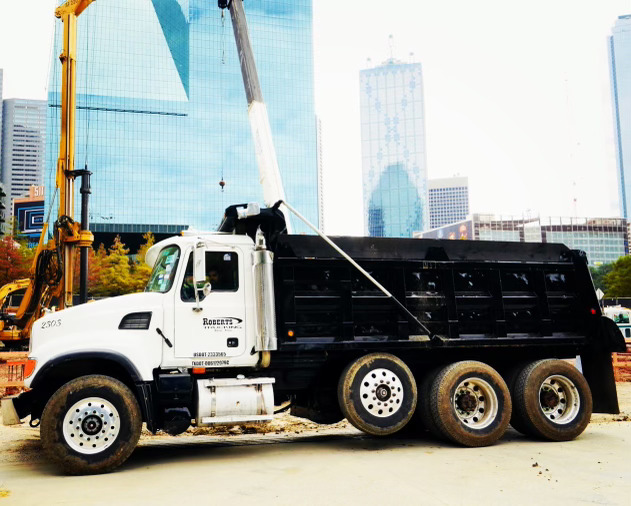
Typical body sizes run 6 to 7 cubic yards for small dump trucks, 10 to 12 for standard trucks, 15 to 16 or more for tri-axles and up to 25 for super dumps, per Soil Connect's guide to cubic yards to tons per truckload. Weight usually caps the load first. Federal limits on the Interstate are 80,000 lb gross, and states set their own limits on other roads.
That guide's example truck can legally carry about 15 tons of material. At that payload the 120 tons of gravel is 120 ÷ 15 = 8 loads, about 10.5 yards each. The 507.9 tons of fill is 33.9, so book 34 loads. Topsoil flips the problem: 15 ÷ 0.80 = 18.75 yards, more than a standard body holds, so volume sets the count.
Request material through the Find Dirt marketplace and a Dirt Specialist will contact you within 1 business day. Dirt Pros check that the dirt meets your project specifications.
Expected result: A whole number of loads, sized by weight first
Most misses trace back to a weight of dirt per cubic yard that did not match the material on the truck.
The gap is common, and it compounds over a long import. Soil Connect's Dirt Reports data shows a 24% to 30% difference between estimated dirt import and export volumes and the actual amount moved. On a 10,000 yard estimate, that spread is 2,400 to 3,000 yards, or more than 200 loads at 11 yards a load. The usual causes and fixes are below.
Check moisture first. Compare the ticket weight with the truck's struck volume to get a real lb per yard, then rerun the division with that number.
They are weight-limited. A 10-yard truck might haul 7 to 8 yards of heavy clay, 9 to 10 of dry fill and 11 or more of loose topsoil, as Soil Connect's post on cubic yard confusion lays out. Plan loads by tons.
A metric ton is 2,204.6 lb, not 2,000. 100 tonnes is 110.2 short tons, about 10% more material than the number suggests.
They do, widely. A New Mexico mining table adapted from a BLM handbook uses 0.8 tons per yard for fill dirt, while Caterpillar lists 2,550 lb for dry packed earth. Weigh one load of your actual source and use that.
The order was probably placed in loose yards against a compacted quantity. Rebuild it from the Proctor density as in step 3, and track delivered tons against placed yards weekly.
Frequently asked questions
It depends on the soil and how wet it is. Caterpillar lists dry packed earth at 2,550 lb per loose cubic yard and wet excavated earth at 2,700 lb, about 1.28 to 1.35 tons. Clay runs heavier once it is wet. Real density varies by material and moisture, so use your supplier's scale tickets when you have them.
Caterpillar puts dry loose sand at 2,400 lb per cubic yard, damp sand at 2,850 lb and wet sand at 3,100 lb, or 1.2 to 1.55 tons. Sand holds water, so a stockpile left open in the rain can weigh close to 30% more per yard than a dry one. Ask the pit whether its sand pile is covered.
About 1.43 to 1.70 tons for 1/4 to 2 inch gravel. Caterpillar lists it at 2,850 lb dry and 3,400 lb wet per loose cubic yard. Pit run gravel is heavier than dry graded gravel: the New Mexico mining table uses 1.62 tons per yard. For a bid, ask the quarry for the weight it uses on its own scale tickets.
About 0.8 tons. Caterpillar gives one figure, 1,600 lb per loose cubic yard, and a New Mexico state conversion table uses the same 0.8 tons. Neither source publishes a wet weight. Topsoil holds a lot of water, so weigh a load from your source before you price a topsoil order by the ton.
Keep reading
Tell Soil Connect the material and tonnage you need, and a Dirt Specialist will contact you within 1 business day.